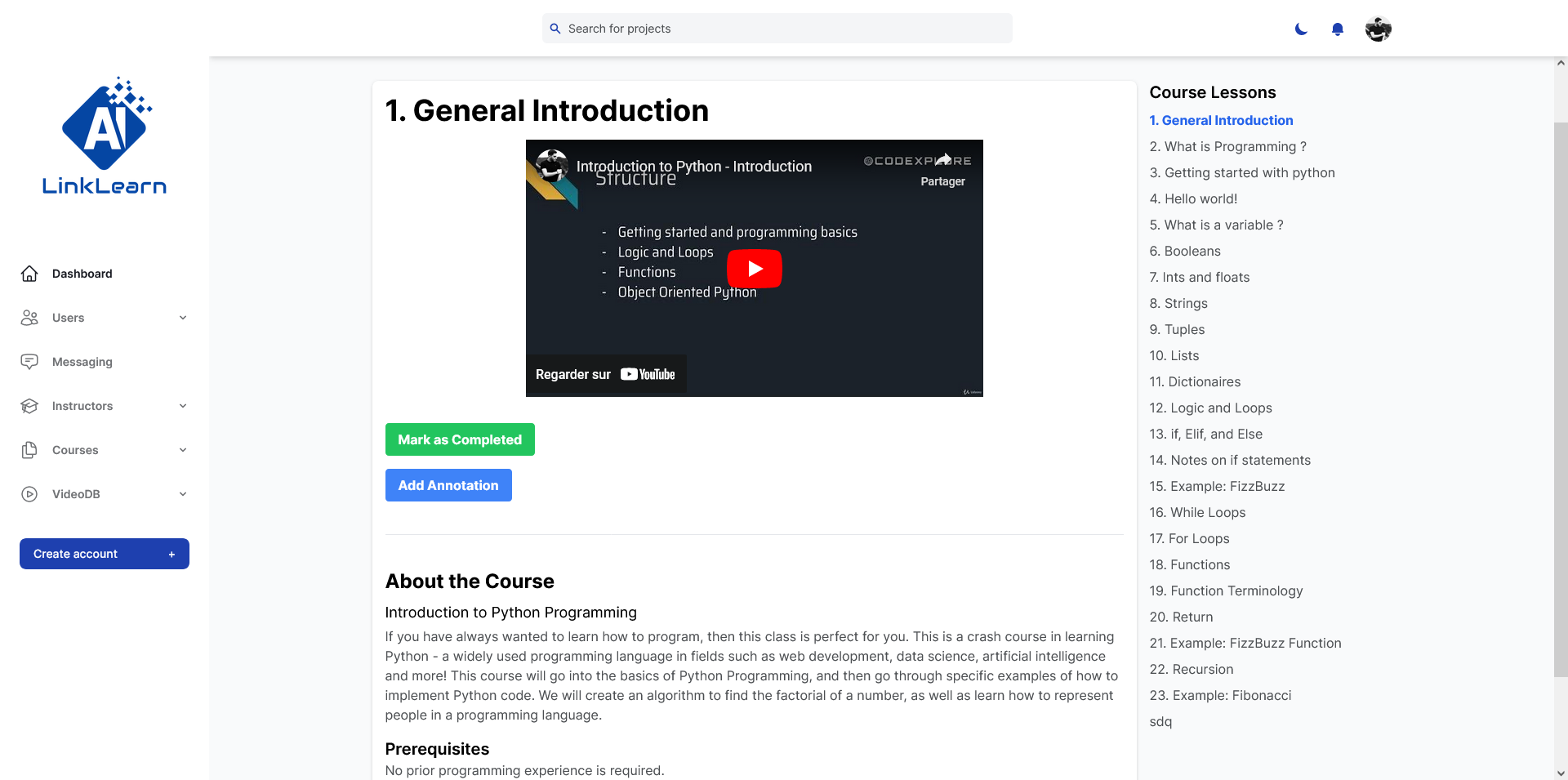
Introduction to Python Programming
University of Pennsylvania (Coursera) — Core Python syntax, data structures, functions, and algorithmic problem-solving.
Interactive research & full-stack demonstration of “Towards a Deep Learning-Based E-learning Platform” by Mostepha Amine Bdeira. Combines a CodeIgniter 4 LMS & Python Flask inference microservice with Keras DLRM (50-dim Latent Embeddings + Dense-100 ReLU) and Scikit-Surprise SVD trained on 3,522 Coursera courses & MovieLens (610×9,724), plus automated video quiz synthesis via YouTubeTranscriptApi + Anthropic Claude-3-Opus.
3,522 COURSES
Coursera Dataset (137.7+ KB, NLTK filtered) × MovieLens 610 users / 9,724 items
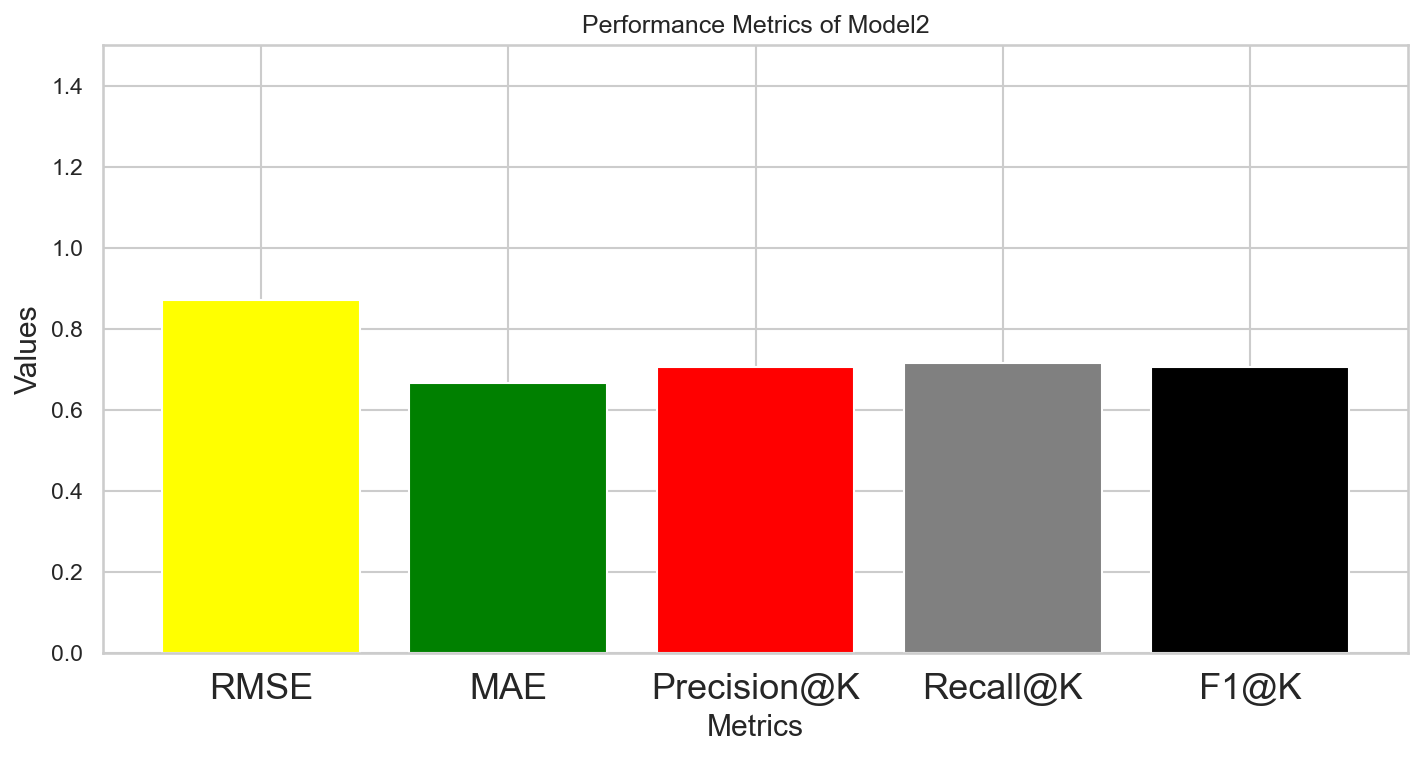
RMSE 0.8718
-20.8% lower RMSE vs Model 1 (1.1004) · MAE: 0.6668 (526,901 params)
71.46% RECALL@K
Precision@K: 70.53% · F1@K: 70.48% · 50-dim Latent Factors
CLAUDE-3-OPUS
YouTubeTranscriptApi captions → 10 auto-graded quiz questions + Video.js RDF notes
Select a learner vector (`user_id`), switch between Model 2 (Concatenate + Dense-100 ReLU), Model 1 (Dot-Product), or Flask Surprise SVD (`svd_model.pkl`), and inspect the predicted top-N courses & JSON microservice response.
Courses in `Coursera.csv` (`3,522` rows) are preprocessed with Python `NLTK` (`stopwords.words('english')`) to tokenize `title`, `description`, and `skills`. Click a token to boost matching courses:
http://127.0.0.1:5000/recommend?user_id=104&model=dlrm_v2
University of Pennsylvania (Coursera) — Core Python syntax, data structures, functions, and algorithmic problem-solving.
Coursera Guided Project — Hands-on model training and evaluation with Scikit-Learn, TensorFlow, Keras, PyTorch, and XGBoost.
Full-stack Python automation, Flask microservices, SQL integration, Pandas data analysis, and REST API engineering.
National Research University Higher School of Economics — Vector spaces, matrix decomposition (SVD), eigenvalues, and latent embeddings.
{
"user_id": 104,
"engine": "Keras DLRM Model 2 (Concatenate + Dense-100 ReLU)",
"embedding_dim": 50,
"metrics": { "rmse": 0.8718, "mae": 0.6668, "precision_at_k": 0.7053, "recall_at_k": 0.7146 },
"recommendations": [
{ "course_id": 412, "title": "Introduction to Python Programming", "predicted_rating": 4.94, "match": "98.4%" },
{ "course_id": 1089, "title": "The Top 5 Machine Learning Libraries in Python", "predicted_rating": 4.89, "match": "96.9%" },
{ "course_id": 2104, "title": "100 Days of Code: The Complete Python Pro Bootcamp", "predicted_rating": 4.85, "match": "95.2%" },
{ "course_id": 874, "title": "First Steps in Linear Algebra for Machine Learning", "predicted_rating": 4.78, "match": "93.7%" }
]
}

Projects both User_Input (None, 1) and Course_Input (None, 1) into 50-dimensional dense latent vectors, flattens them, and computes their scalar Dot_Product (None, 1). Captures linear user-item affinity but suffers from validation loss drift after Epoch 6.
Concatenates the flattened 50-dim User and Course embeddings into a (None, 100) joint feature vector and passes it through a Dense(100, activation='relu') hidden layer (10,100 params) before the Dense(1) regression head (Adam lr=0.001, MSE loss).
Model 2 (Concatenate + Dense-100 ReLU) stabilizes test MSE at ~0.76 (RMSE 0.8718), whereas Model 1’s inner product overfits after Epoch 6.
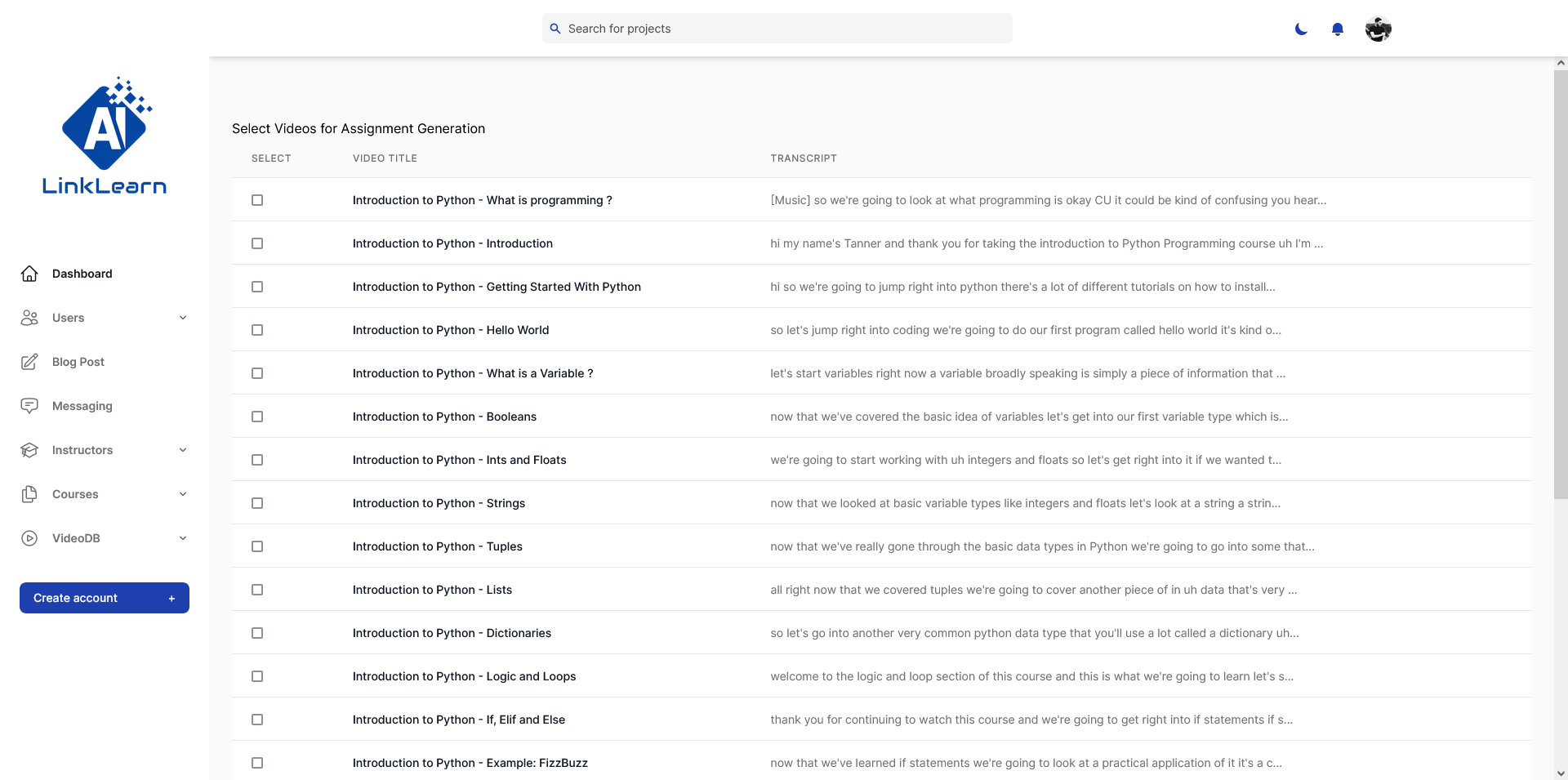
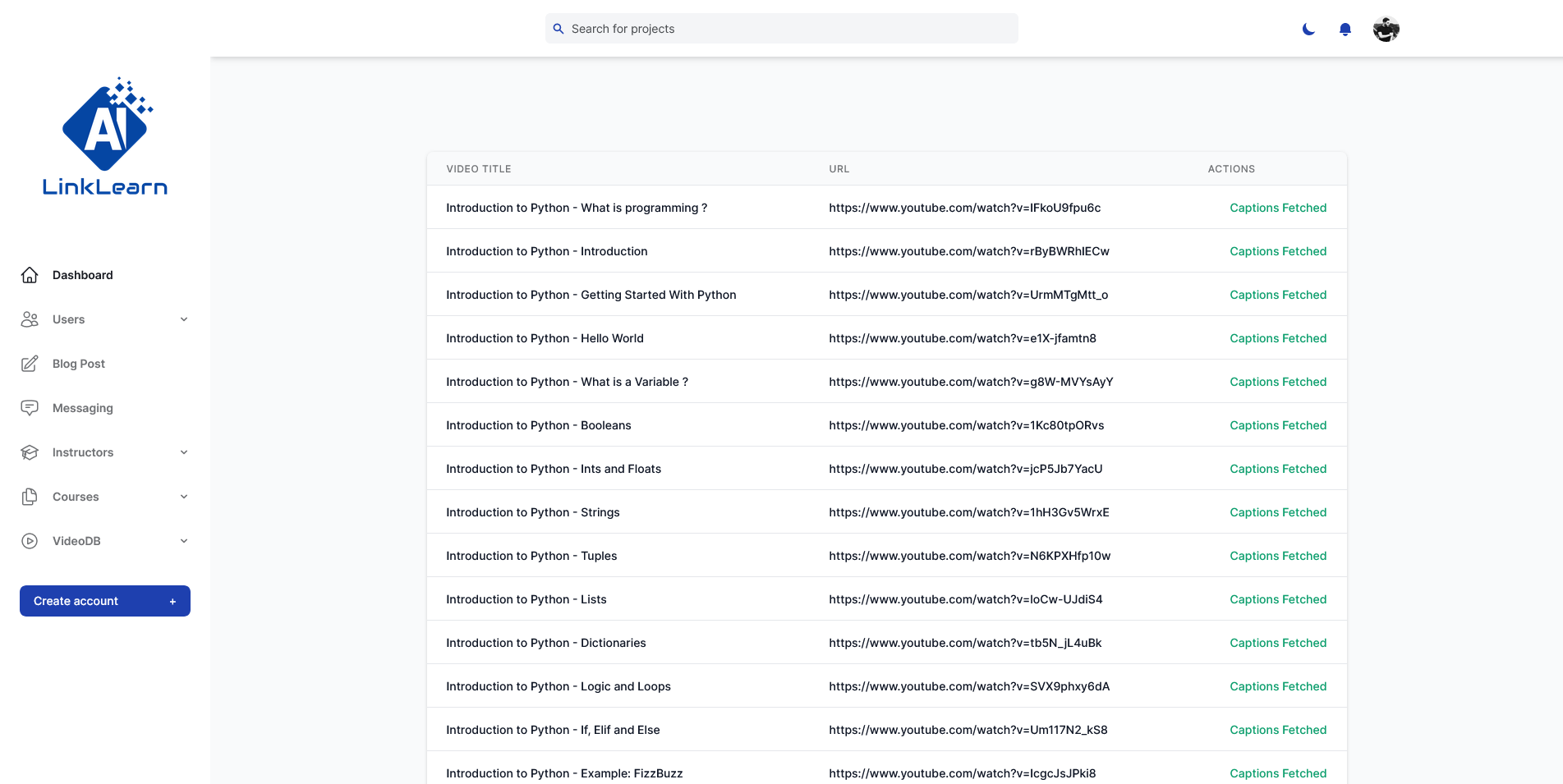
In Thesis Section 5.6 (Assignment Generation Page, Fig. 62–71), instructors select lecture captions extracted via YouTubeTranscriptApi.get_transcript(video_id) and invoke claude-3-opus-20240229 (max_tokens=4000, temp=0.7) to generate interactive assessments.
[00:14.2] "In Python, variables are created the moment you first assign a value to them using the = operator."
[01:08.5] "Unlike C or Java, Python is dynamically typed: a variable can hold an integer (x = 4) and later be reassigned to a string (x = 'LinkLearn')."
[02:19.0] "Variable names are case-sensitive (age, Age, and AGE are three distinct identifiers) and must start with a letter or underscore."
dbpedia.org/resource/Dynamic_typing
Topic: Introduction to Python — Variables & Dynamic Typing (3 Auto-Graded Questions)
model="claude-3-opus-20240229", max_tokens=4000, temperature=0.7
The PHP CourseController::recommend($userId) issues an HTTP GET request to the Python Flask microservice (http://localhost:5000/recommend?user_id=...), which unpickles svd_model.pkl / evaluates the Keras DLRM embeddings and returns top-N ranked course IDs.
Structured across users, courses (3,522 Coursera records), ratings (MovieLens user-item matrix), videos_db (YouTube IDs + fetched transcripts), annotations, and assignments.
Grounded in Semantic Web standards (RDF triples, OWL ontologies, SPARQL endpoints, and JSON-LD educational metadata) to connect video timestamps and course skills with external knowledge graphs like DBpedia.